
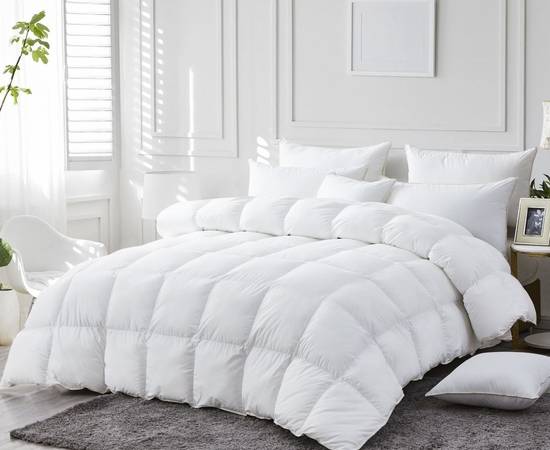
Sleep quality suffers dramatically when the bedding fails to maintain proper temperature regulation throughout the night. Down’s remarkable insulating properties stem from millions of microscopic filaments that branch outward from each cluster’s centre, creating an intricate three-dimensional web. This natural architecture captures and holds warm air close to the body whilst simultaneously allowing moisture vapour to escape, preventing the uncomfortable clamminess associated with synthetic alternatives.
The superior performance of a goose down comforter becomes evident when examining the sophisticated structure of individual down clusters under magnification. Each cluster contains thousands of tiny filaments that interlock and overlap, forming countless air pockets that serve as natural insulation barriers. This complex arrangement allows down to achieve remarkable loft whilst maintaining an incredibly lightweight feel that synthetic materials simply cannot replicate through manufacturing processes.
A twin down comforter demonstrates these insulating principles perfectly, as the smaller size allows consumers to experience down’s temperature-regulating benefits without the investment required for larger bedding sizes. The science behind down’s effectiveness lies in its ability to create what textile experts call “dead air space” – stationary air pockets that prevent heat transfer through convection. These trapped air spaces form the foundation of down’s legendary warmth-to-weight ratio that has made it the preferred choice for extreme weather gear.
The Microscopic Architecture of Down Insulation
- Natural Cluster Formation: Down clusters develop as waterfowl mature, with each bird producing approximately 30 grams of premium down annually. The clusters form beneath the outer feathers, serving as the bird’s primary insulation system against harsh weather conditions. These natural formations cannot be replicated artificially, making genuine down a finite resource that commands premium pricing in the luxury bedding market.
- Branching Filament Structure: Individual down clusters contain between 15,000 to 20,000 microscopic filaments that branch outward in all directions from a central point. These filaments possess natural elasticity that allows them to compress under pressure yet spring back to their original configuration when released. This resilience enables down bedding to maintain its loft and insulating properties even after years of regular use and compression.
- Air Pocket Creation: The interlocking nature of down filaments creates millions of tiny air pockets throughout the comforter’s interior. Each pocket measures approximately 0.1 millimetres in diameter, small enough to prevent air circulation that would compromise insulation effectiveness. These pockets work collectively to trap warm air radiated by the sleeper’s body temperature, creating a personalised microclimate that adjusts naturally to changing conditions throughout the night.
Understanding Fill Power and Quality Measurements
- Fill Power Definition: Fill power represents the volume in cubic inches that one ounce of down occupies when allowed to reach maximum loft under standardised testing conditions. Higher fill power ratings indicate superior quality down with greater insulating efficiency per unit weight. Premium down typically ranges from 600 to 900 fill power, with ratings above 700 considered luxury grade suitable for high-end bedding applications.
- Testing Methodology: Laboratory technicians measure fill power using standardised compression tests that simulate real-world usage conditions. Down samples undergo controlled compression cycles before measurement to ensure consistent results across different manufacturers. The testing process involves placing precisely measured down quantities in graduated cylinders and recording the volume occupied after specified settling periods under controlled temperature and humidity conditions.
- Quality Implications: Higher fill power ratings directly correlate with superior insulating performance and longevity expectations. Premium down with 800+ fill power provides exceptional warmth whilst maintaining breathability characteristics essential for comfortable sleep. These quality grades also demonstrate superior compression recovery, maintaining their loft even after extended use periods that would permanently flatten lesser quality alternatives.
Temperature Regulation Through Natural Breathability
- Moisture Management Systems: Down’s natural structure facilitates moisture vapour transfer through microscopic channels between filaments. This breathability prevents the accumulation of perspiration that creates uncomfortable sleeping conditions in synthetic bedding. The moisture-wicking properties work passively, requiring no external mechanisms or chemical treatments to maintain effectiveness throughout the product’s lifespan.
- Thermal Adaptation Properties: Down automatically adjusts its insulating capacity based on ambient temperature changes and body heat variations. During cooler periods, the clusters expand to trap additional warm air, increasing insulation effectiveness. Conversely, warmer conditions cause slight compression that reduces insulation whilst maintaining breathability for comfort. This self-regulating behaviour eliminates the need for multiple seasonal bedding sets.
- Overheating Prevention Mechanisms: The natural breathability of down prevents the overheating commonly experienced with synthetic fills that trap moisture and heat. Air circulation through the down matrix allows excess heat to escape whilst retaining sufficient warmth for comfort. This temperature regulation occurs automatically without conscious adjustment from the sleeper, contributing to uninterrupted sleep cycles essential for restorative rest.
Scientific Principles Behind Down’s Superior Performance
- Thermal Conductivity Characteristics: Down exhibits extremely low thermal conductivity due to its high air content and minimal solid material per unit volume. The trapped air spaces act as thermal barriers that prevent heat transfer through conduction, whilst the lightweight structure minimises convective heat loss. This combination creates an insulation system that outperforms synthetic alternatives by significant margins in laboratory testing conditions.
- Compression Recovery Science: The natural elasticity of down filaments enables remarkable compression recovery that maintains insulation effectiveness over time. Each filament possesses a protein structure similar to human hair, providing flexibility and resilience against mechanical stress. This biological composition allows the down to withstand thousands of compression cycles whilst retaining its original loft and insulating capacity.
- Longevity Factors: Premium down bedding maintains its performance characteristics for decades with proper care, unlike synthetic alternatives that degrade within several years. The natural proteins in down resist breakdown under normal use conditions, whilst the three-dimensional structure distributes stress loads evenly across multiple filaments. This durability makes down comforters a long-term investment that provides consistent performance throughout their extended lifespan.
Comparing Down Performance Across Different Applications
Altitude and Climate Considerations: Down’s insulating performance varies with atmospheric conditions, performing optimally in dry environments with stable temperatures. High-altitude locations with low humidity provide ideal conditions for down’s natural properties to function effectively. Coastal regions with high humidity may require additional care to maintain down’s loft and prevent moisture-related issues that compromise insulation effectiveness.
The following factors influence down performance in different environments:
- Humidity levels – Lower humidity maintains optimal loft and breathability characteristics
- Temperature stability – Consistent temperatures allow down to maintain steady insulation levels
- Air circulation – Adequate ventilation prevents moisture accumulation within the bedding system
- Seasonal variations – Down adapts naturally to changing conditions throughout the year
- Altitude effects – Lower air density at elevation enhances down’s insulating properties
Synthetic Comparison Metrics: Laboratory testing consistently demonstrates down’s superior warmth-to-weight ratio compared to synthetic alternatives. Down provides equivalent insulation at approximately 60% of the weight required for synthetic fills. This weight reduction becomes particularly significant in larger bedding sizes where synthetic fills create uncomfortably heavy products that interfere with natural sleep movement patterns.
Optimising Down Performance for Maximum Efficiency
- Proper Loft Maintenance: Down requires adequate space to achieve maximum loft and insulating capacity. Compressed storage or inadequate fluffing reduces the air spaces essential for thermal performance. Regular airing and gentle agitation restore down’s natural loft after periods of compression, ensuring consistent insulating effectiveness throughout the product’s service life.
- Care and Maintenance Protocols: Professional cleaning services specialising in down products provide optimal care that maintains insulation properties whilst removing accumulated oils and debris. Home care requires gentle detergents and thorough drying to prevent down clustering that reduces loft. Proper maintenance extends product lifespan whilst preserving the thermal characteristics that justify down’s premium positioning in the bedding market.
Down’s remarkable insulating properties result from millions of years of evolutionary refinement that created the perfect natural insulation system. The complex microscopic structure traps air efficiently whilst maintaining breathability that prevents overheating during sleep. Understanding these scientific principles enables informed decisions when selecting premium bedding that provides superior comfort and longevity. Transform your sleep environment by choosing down bedding that harnesses these natural insulating properties for optimal temperature regulation throughout the night.
Featured Image Source: https://s.turbifycdn.com/aah/yhst-95447403303911/1200heavydown-50.jpg
