
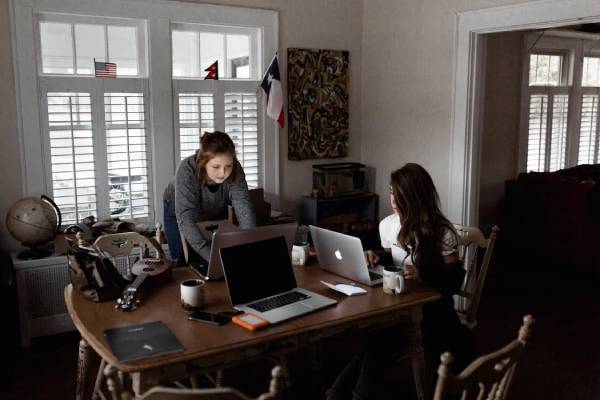
Rise and grind. No days off. Sleep when you’re dead.
The battle cries of hustle culture echo through every startup office, co-working space, and entrepreneurial podcast. They promise a simple equation: work harder than everyone else, and success will inevitably follow.
But what if this glorification of exhaustion isn’t just unhealthy—what if it’s actively destroying the innovation it claims to fuel?
The Hustle Trap Everyone Falls Into
The modern work narrative is seductive: founders sleeping under their desks, entrepreneurs working 100-hour weeks, and executives bragging about 4 AM email sessions. These stories aren’t just normalized—they’re celebrated as the necessary price of success.
The message is clear: if you’re not constantly working, someone else is, and they’re going to win.
This mindset has created a generation of professionals measuring their worth by their busyness, wearing exhaustion like a badge of honor, and feeling guilty during any moment of rest. The consequences aren’t just showing up in burnout statistics—they’re quietly suffocating the very innovation these workers are sacrificing everything to create.
Why Your Brain Can’t Innovate on Demand
The uncomfortable truth about creativity and innovation: they don’t respond to brute force.
Science has repeatedly confirmed what many refuse to accept—the human brain doesn’t generate breakthrough ideas when exhausted, stressed, and operating on autopilot. Yet hustle culture demands exactly this depleted mental state.
Consider these unsettling realities:
- Sleep deprivation reduces cognitive performance by 25% – roughly equivalent to legal intoxication
- Chronic stress physically shrinks the prefrontal cortex – the brain region responsible for creative thinking
- Constant task-switching reduces IQ by 10-15 points – more than twice the impact of smoking marijuana
The cruel irony? The harder people push for innovation under these conditions, the less capable they become of producing it.
The Hidden Cost No One Talks About
Beyond the personal toll, hustle culture extracts an organizational price few recognize until it’s too late:
Diminishing Returns Nobody Measures
After approximately 50-55 hours of work per week, productivity doesn’t just plateau—it begins actively declining. Yet hustle culture pushes well beyond this threshold, creating an illusion of progress while actually moving backward.
The math is brutal: those extra 30 weekly hours aren’t just unproductive—they’re counterproductive, creating more problems than solutions.
Surface-Level Thinking When Depth is Required
Exhausted minds default to obvious, linear solutions instead of exploring unconventional possibilities. They grab the first workable answer rather than discovering the best answer.
In competitive markets, these surface-level responses rarely create meaningful differentiation.
The Innovation Death Spiral
Perhaps most dangerous is the self-reinforcing cycle hustle culture creates:
- Teams work harder to solve problems
- Exhaustion leads to lower-quality solutions
- Poor solutions create new problems
- Teams push even harder to fix the new problems
- Repeat until collapse
This cycle explains why many hardworking teams find themselves running faster just to stay in place.
Why Rest is the Ultimate Competitive Advantage
The most innovative companies have discovered a counterintuitive truth: strategic rest produces better results than relentless grinding.
The evidence is overwhelming:
- 71% of breakthrough ideas occur during periods of mental relaxation – not focused work
- Regular disconnection from work problems improves solution quality by 33%
- Teams with mandated rest periods outperform continuous-work teams by 20% in creative problem-solving
History supports these findings. Einstein’s theory of relativity came during a leisurely bike ride. Newton’s gravity insights arrived while relaxing in an orchard. The structure of DNA was visualized during a countryside walk.
True innovation demands mental space that hustle culture systematically eliminates.
The Companies Quietly Rejecting Hustle Culture
While hustle culture dominates headlines, a growing movement of companies is quietly embracing a fundamentally different approach—and seeing remarkable results.
These organizations aren’t relaxing their standards. They’re not accepting mediocrity. They’re simply recognizing that sustainable, breakthrough innovation requires a different relationship with work:
- Buffer implemented four-day workweeks—and saw productivity increase
- Basecamp maintains strict 40-hour workweeks with no weekend communication
- Microsoft Japan tested four-day workweeks and saw productivity jump 40%
These companies aren’t sacrificing performance—they’re enhancing it by rejecting the false promise of hustle culture.
The Deliberate Innovation Framework
The most forward-thinking companies have abandoned both the extremes of hustle culture and unstructured relaxation. Instead, they’ve developed a deliberate approach to innovation that maximizes creative output while minimizing burnout:
1. Oscillation Instead of Constant Pressure
Rather than maintaining relentless intensity, these organizations deliberately alternate between periods of focused engagement and strategic disengagement. This rhythmic approach aligns with the brain’s natural creative cycles.
2. Deep Work Over Busy Work
Instead of measuring hours, these companies measure depth of engagement. Five hours of genuine deep work produces more innovation than 12 hours of scattered, reactive work—and leaves mental energy for insights to emerge during downtime.
3. Psychological Safety Over Competitive Pressure
While hustle culture often creates internal competition, innovative organizations deliberately foster environments where risk-taking is safe and failure is viewed as learning. This psychological safety dramatically increases the flow of unconventional ideas.
4. Incubation Time for Complex Problems
The most innovative companies systematically build incubation periods into their processes—times when problems are consciously set aside rather than attacked relentlessly. This counterintuitive approach leverages the brain’s background processing capabilities.
The Warning Signs You’re Sacrificing Innovation
How can you tell if hustle culture is undermining innovation in your organization? Watch for these warning signals:
- Meetings filled with tired, disengaged participants
- The same problems reappearing despite working harder
- Communication becoming increasingly reactive rather than thoughtful
- Reliance on obvious solutions rather than creative approaches
- Team members unable to articulate what they’re working toward—only what they’re working on
Each of these indicates that hustle culture has begun eroding your innovative capacity.
The Path Forward
Breaking free from hustle culture doesn’t mean embracing laziness. It means recognizing that sustainable innovation requires a fundamentally different approach to work—one that respects the actual science of human creativity rather than toxic productivity myths.
The choice isn’t between working hard and hardly working. It’s between working in alignment with how the brain actually innovates versus grinding against the grain of human cognition.
Companies that make this shift don’t just produce more breakthrough ideas—they attract and retain top talent increasingly disillusioned with the false promises of hustle culture.
The Uncomfortable Reality
The hardest truth for hustle culture adherents to accept: many of their endless hours aren’t moving them forward—they’re creating an expensive illusion of progress while actually undermining their goals.
This realization isn’t just uncomfortable—it’s threatening to identities built around equating hours worked with value created.
Yet facing this reality is the first step toward building organizations capable of true, sustainable innovation rather than performative exhaustion.
The question isn’t whether you’re willing to hustle. It’s whether you’re willing to be smart about how you work—even when that means challenging the very culture many wear as a badge of honor.
Featured Image Source: https://www.pexels.com/photo/photo-of-women-using-laptops-3178744
