
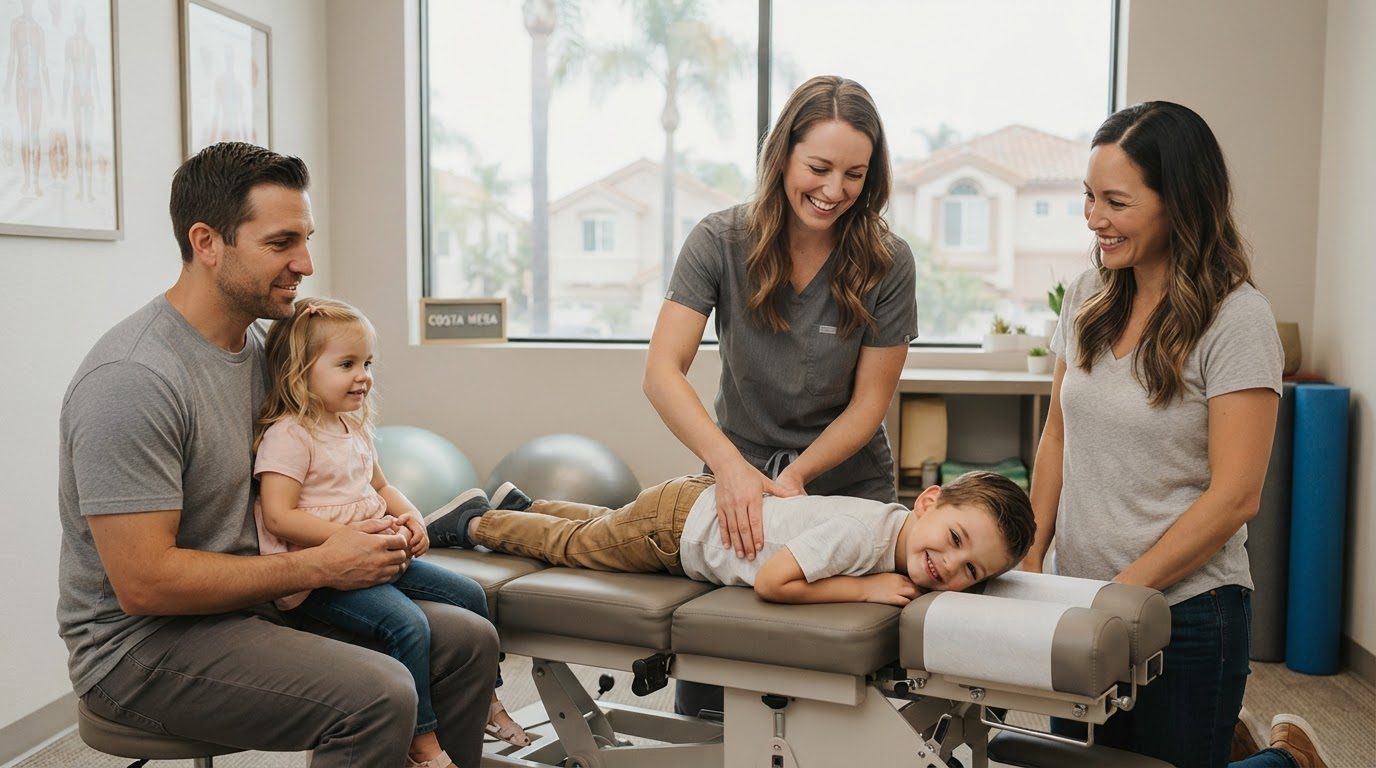
Finding a family chiropractor in Costa Mesa often begins with a practical question: can one office understand the different needs of a pregnant parent, an active teenager, a working adult, and an older family member? Whole-family care is most useful when it combines convenience with individualized clinical decision-making.
When residents search for a Family Chiropractor In The Area, they may be looking for support with movement, comfort, posture, activity-related strain, or general wellness. Chiropractic care is not a substitute for emergency or medical treatment, but it may be one part of a broader health plan when appropriately evaluated.
Blooming Chiropractic developed from a focus on pregnancy care, newborn care, and growing families. Families considering care can review the practice’s Blooming Chiropractic information, then discuss health history, expectations, and whether an appointment is appropriate.
A Family-Centered Approach to Chiropractic Wellness
A family-centered chiropractic office may serve several generations under one roof, but that does not mean every person receives the same adjustment or care schedule. A responsible evaluation considers age, mobility, prior injuries, medications, pregnancy status, activity level, comfort with hands-on care, and the reason for the visit.
Blooming Chiropractic’s origins in pregnancy chiropractic and newborn care reflect how family needs can evolve. A parent may initially seek support during pregnancy, return postpartum, and later bring in a child or older sibling. Grandparents may have separate concerns involving balance, stiffness, mobility, or age-related changes.
Common goals may include:
- Moving more comfortably during daily activities.
- Addressing muscle tension or activity-related strain.
- Supporting posture and functional movement.
- Maintaining mobility as activity levels or life stages change.
- Developing practical wellness habits at home.
These goals should be discussed without assuming a guaranteed result. Chiropractic care is not appropriate for every condition, and a qualified practitioner should explain when referral or medical evaluation is more suitable.
Care for Parents, Children, and Growing Families
Age and developmental stage influence how a visit is conducted. Children may need a slower introduction, clear explanations, and a comfort-focused assessment. Older children and teens may be evaluated in relation to sports, backpacks, screen use, posture, growth, and repetitive activity. Adults may present with work-related tension, lifting demands, exercise strain, or sleep disruption.
Pregnancy and postpartum care require additional communication. The practitioner should know the pregnancy stage, delivery history, current symptoms, and any guidance from the obstetric or medical team. Positioning, technique selection, and treatment intensity may be modified for comfort and safety. Postpartum concerns can also involve feeding positions, carrying a baby, reduced sleep, and changes in daily movement.
Parents commonly seek care after:
- Repeated lifting or carrying.
- Desk work, driving, or prolonged standing.
- New exercise routines or recreational activity.
- Interrupted sleep and awkward sleeping positions.
- Household tasks that produce recurring neck, shoulder, or back tension.
A child or teen with significant pain, weakness, numbness, fever, unexplained weight loss, difficulty walking, or symptoms after a serious injury should receive appropriate medical evaluation. Chiropractic care should not delay urgent assessment.
What to Expect During a Family Chiropractic Visit
A first visit generally begins with a health history and conversation about the patient’s goals. Useful information includes current symptoms, onset and severity, previous injuries, surgeries, medications, relevant diagnoses, pregnancy, prior chiropractic care, and treatments that have or have not helped.
The practitioner may then assess:
- Posture and general alignment.
- Active range of motion.
- Gait, balance, or functional movement.
- Areas of tenderness or muscle tension.
- Neurological warning signs that may require referral.
Depending on the findings, the practitioner may recommend an adjustment, soft-tissue work, trigger point therapy, exercise guidance, observation, or referral. Imaging is not automatically necessary for every complaint; when it is indicated, the decision should be based on clinical findings and accepted medical criteria.
Family scheduling can be convenient, but each person should still receive a separate assessment and documented plan. A parent may consent for a minor, while adult patients should participate directly in decisions about their own care. Families should feel comfortable asking what technique is proposed, why it is recommended, what alternatives exist, and when progress will be reassessed.
Techniques and Complementary Wellness Tools
Blooming Chiropractic states that its approach may include the Zone Healing Technique, trigger point therapy, massage, essential oils, homeopathic remedies, and other holistic tools. These approaches should be presented as complementary wellness options rather than replacements for diagnosis, emergency care, or treatment from a physician or other licensed medical professional.
Trigger point therapy focuses on localized areas of muscle tenderness and tension. Massage may be incorporated for soft-tissue comfort or relaxation when appropriate. The precise technique, pressure, duration, and frequency should vary according to the patient’s age, tolerance, health history, and goals.
Complementary products also require informed discussion. Essential oils can cause skin irritation, allergic reactions, or respiratory symptoms, and some may be unsuitable during pregnancy or around young children and pets. Homeopathic products should not be used to replace evidence-based treatment for serious illness. Patients should disclose:
- Prescription and over-the-counter medications.
- Allergies and sensitivities.
- Pregnancy or breastfeeding.
- Chronic conditions and recent procedures.
- Current medical treatment or restrictions.
The practice’s collaborative model is most effective when patients understand the expected purpose and limitations of every intervention.
Serving Families Throughout Costa Mesa and Orange County
Blooming Chiropractic serves families in East Side Costa Mesa, West Side Costa Mesa, Mesa Verde, Newport Beach, Newport Coast, Irvine, Corona del Mar, Newport Heights, Huntington Beach, Fountain Valley, and surrounding communities. For local families, proximity matters because consistent appointments can be difficult to coordinate around school, work, sports, childcare, and traffic on major Orange County routes.
Costa Mesa’s coastal environment can also shape everyday strain. Cycling, surfing, running, walking, and other outdoor activities may create repetitive loading, while commuting and desk work can contribute to prolonged static posture. These factors are not diagnoses, but they are useful context during an evaluation.
When comparing a nearby provider, families should consider:
- Experience with the relevant age groups and life stages.
- Communication about consent, risks, alternatives, and referrals.
- Appointment coordination for multiple household members.
- Accessibility, parking, scheduling, and office environment.
- Clear fees and whether insurance or out-of-network billing applies.
Costs vary widely by location, insurance, treatment type, and visit length. In many Southern California practices, an initial consultation and examination may range roughly from $75 to $200, while follow-up visits may range from $40 to $100 or more. These are general estimates, not a quote; families should ask about self-pay rates, packages, imaging, cancellation policies, and insurance responsibilities before beginning care.
Questions Families Commonly Ask
Can a chiropractor treat more than one member of the same family?
Yes. One office may care for multiple relatives, provided each patient receives an individual history, examination, consent process, and care plan. A child, adult, pregnant patient, and grandparent should not automatically receive identical techniques.
How is care adapted for children, adults, and pregnant patients?
Adaptations may involve positioning, communication, pressure, technique, appointment length, and referral thresholds. Children may need a gradual introduction. Adults may be assessed around work or activity demands. Pregnancy care requires attention to trimester, comfort, medical history, and coordination with the obstetric provider when needed.
What happens during a first chiropractic appointment?
Expect a conversation about symptoms and goals, a review of health history, and observation of movement or posture. The practitioner may recommend care, provide self-management guidance, or refer the patient elsewhere if findings suggest a condition outside chiropractic scope.
How should a family choose a chiropractor in the area?
Look for transparent communication, appropriate licensing, experience with the family’s age groups, and a willingness to explain clinical reasoning. Avoid providers who promise universal cures, discourage medical care, or recommend an expensive long-term plan without meaningful reassessment.
When should someone seek medical care instead?
Seek urgent medical attention for severe or rapidly worsening pain, chest pain, trouble breathing, loss of bladder or bowel control, new weakness, confusion, major trauma, high fever, or other alarming symptoms. When in doubt, contact a physician or emergency service first.
Families can contact Blooming Chiropractic to discuss individual needs, ask questions about family scheduling, and determine whether an appointment is an appropriate next step.
