
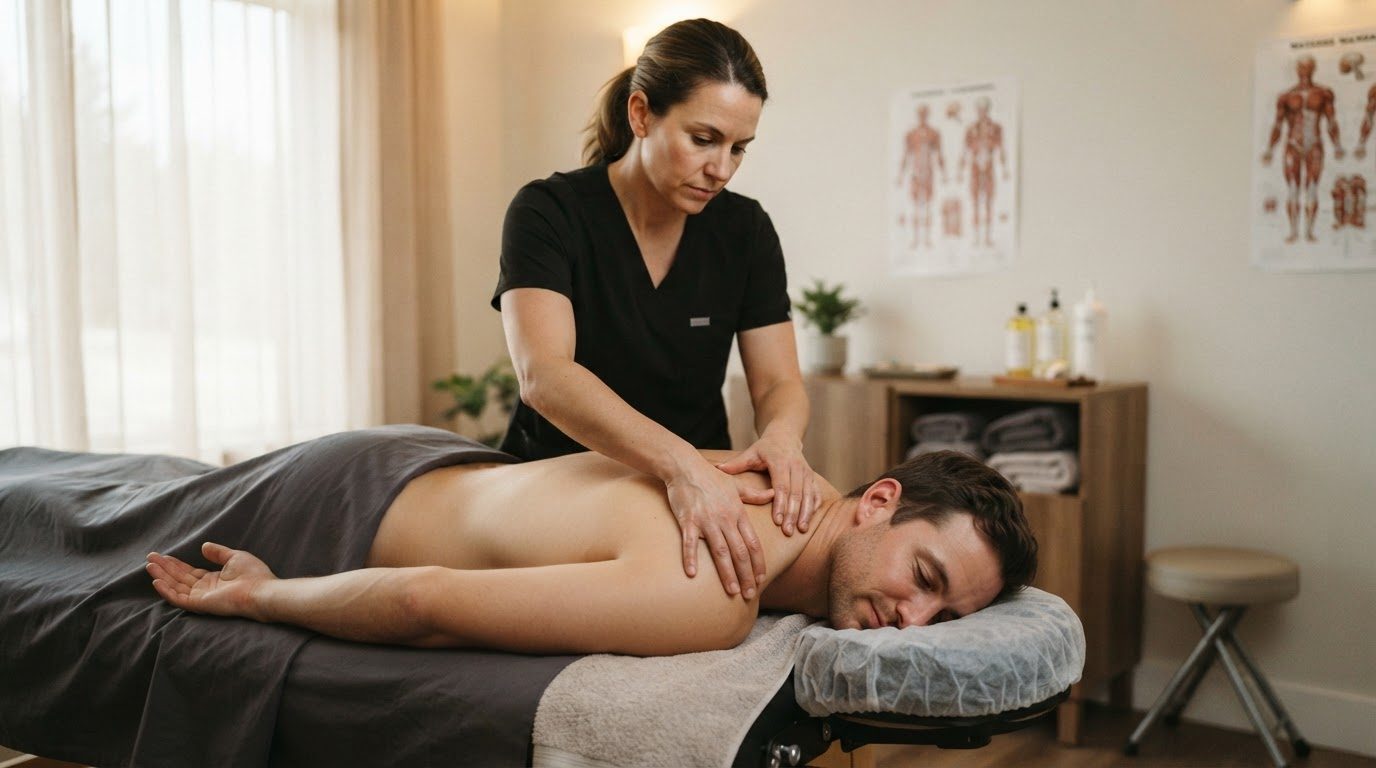
A massage can feel wonderful, but relaxation is only one possible goal. If your neck tightens after desk work, your low back aches after exercise, or an old injury keeps affecting movement, the more useful question is not simply “Which massage feels best?” It is “What is contributing to the problem, and what type of hands-on care fits it?”
Massage therapy involves manipulating the body’s soft tissues, including muscles and connective tissues. It is used for relaxation, wellness, and supportive care for certain pain conditions. Massage therapy is most effective as part of a thoughtful plan that accounts for your symptoms, daily demands, movement patterns, and health history.
At True Health Chiropractic and Acupuncture, sessions in Lombard, Illinois, are customized after discussing what you feel, how you move, and what you want to return to doing. Available approaches include deep tissue, sports massage, myofascial release, and prenatal care.
Start with the problem, not the technique
Massage styles are not interchangeable. Pressure, pace, positioning, and the therapist’s objective all influence the experience. A light relaxation session is different from focused work for persistent muscle tension, and neither should automatically be treated as a cure for an underlying medical condition.
Before an appointment, identify the main reason you are seeking care:
- You want help unwinding and reducing general stress.
- You have a specific area of tightness or discomfort.
- You are recovering from training, repetitive work, or an injury.
- Your movement feels restricted or uneven.
- You need pregnancy-conscious positioning and pressure.
This information helps the therapist determine whether a broader calming session or more targeted treatment is appropriate. It also gives you an opportunity to mention medications, recent procedures, diagnosed conditions, pregnancy, unusual swelling, numbness, or changes in strength.
Muscle tightness often reflects more than a single “knot.” Posture, previous injuries, repetitive activity, stress, and stiff joints can alter how the body moves. One muscle group may compensate for another, creating recurring strain. Massage may reduce symptoms and improve comfort, but lasting improvement often depends on addressing the habits or movement limitations that keep reloading the area.
Choosing a massage approach
Relaxation or Swedish massage
Swedish massage typically uses long, flowing strokes, kneading, rhythmic tapping, and gentle joint movement. It is commonly selected for relaxation, general muscle tension, and a calming treatment experience. Pressure should remain comfortable and communicable throughout the session.
Deep tissue massage
Deep tissue work uses slower, more deliberate pressure directed toward deeper layers of muscle and connective tissue. It may suit localized stiffness or persistent patterns of tension, but deeper pressure is not automatically better. Excessive force can leave a person sore and is inappropriate for certain health risks.
Tell the therapist immediately if pressure becomes sharp, burning, numb, or otherwise uncomfortable. Therapeutic work should be adjusted to your response rather than measured by how much discomfort you can tolerate.
Sports massage
Sports massage is designed around athletic activity and may be used before or after training, depending on the goal. A therapist may focus on mobility, recovery, areas exposed to repetitive loading, or muscle strains. It is not limited to competitive athletes; active people who exercise recreationally may also seek this approach.
Massage should not replace evaluation of a significant injury. Persistent swelling, inability to bear weight, marked weakness, or sudden loss of motion warrants medical assessment.
Myofascial and trigger-point work
Myofascial techniques address tension in the fascia, the connective-tissue network surrounding muscles and other structures. Trigger-point work applies focused pressure to a particularly sensitive or contracted area. Both approaches are used to target restricted or painful regions, but the therapist should first determine whether the symptoms are appropriate for massage.
Prenatal massage
Pregnancy changes positioning, balance, circulation, and joint stress. Prenatal care uses positioning and techniques adapted to those changes. Tell the provider how far along the pregnancy is and disclose any pregnancy complications or restrictions from your obstetric clinician before booking.
What a well-planned session looks like
A useful appointment begins before hands-on treatment. The therapist should ask about your symptoms, relevant health history, activity, and treatment goals. You should also have a chance to explain what movements or activities are difficult.
At True Health, the stated process includes discussing what you are feeling, examining how your body moves, identifying where strain begins, and selecting techniques based on your goals. That approach differs from applying the same routine to every client.
During the session, expect clear communication about:
- The areas being treated and why.
- The amount of pressure being used.
- Positioning, draping, and comfort.
- Any sensitivity or pain that should be reported.
- Whether the plan needs to change as your symptoms respond.
You remain in control of the session. Professional massage uses appropriate draping, exposes only the area being treated, and requires consent for treatment. You can request a pressure change, a different position, a pause, or an end to the appointment at any time.
Most sessions at True Health run about 60 minutes, although the timing may be adjusted for a focused concern or injury. The therapist recommends an appropriate schedule after the initial visit rather than applying one fixed timetable to everyone.
What results are realistic?
Massage often produces short-term changes in comfort, muscle relaxation, and perceived mobility. Evidence for specific pain conditions is mixed. Research summarized by the National Center for Complementary and Integrative Health indicates that massage may help neck or shoulder pain for a limited period, while evidence for low-back pain is weaker. Small studies also suggest possible short-term benefit for knee osteoarthritis pain, and findings for headaches are inconsistent.
That does not make massage useless. It means the purpose should be defined accurately. A session might help you move more comfortably, tolerate activity, reduce perceived tension, or participate more easily in an exercise and rehabilitation plan. It should not be presented as a guaranteed correction for every source of pain.
At True Health, massage is positioned as part of a broader chiropractic and acupuncture setting rather than a standalone spa service. Patients may seek care for hip stiffness, posture-related discomfort, rotator cuff irritation, or limited mobility. If symptoms are severe, recurring, or unexplained, assessment by an appropriate health professional remains essential.
Safety: when massage is not the first step
Massage is generally considered low risk when performed appropriately, but rare serious complications have been reported, including nerve injury, bone fracture, and blood clots. More vigorous techniques may present greater concern for people who are older or medically vulnerable.
Ask a qualified clinician before massage, or postpone treatment, if you have:
- A suspected or diagnosed blood clot, unexplained one-sided swelling, or sudden shortness of breath.
- A recent fracture, surgery, or significant traumatic injury.
- Severe osteoporosis or another condition that makes pressure risky.
- An active skin infection, open wound, or contagious illness in the treatment area.
- Uncontrolled bleeding risk or use of medication that affects clotting.
- New neurological symptoms, such as progressive weakness or loss of sensation.
- A serious medical condition for which your treating clinician has placed restrictions.
Massage is not an appropriate response to every symptom. Chest pain, sudden weakness, severe abdominal pain, major trauma, or breathing difficulty require urgent medical care rather than a massage appointment.
How often should you schedule treatment?
Frequency depends on the reason for care and how your body responds. True Health indicates that weekly visits are common as a starting point for acute pain or injuries, while maintenance appointments every 2 to 4 weeks work well for many people. Those intervals are general guidance, not a prescription.
A practical plan should consider whether symptoms are improving, how long benefits last, whether the underlying activity has changed, and whether other care is needed. If you repeatedly need intensive treatment for the same problem without meaningful improvement, reassess the diagnosis and overall plan with a qualified professional.
Between sessions, the habits that contribute to tension still matter. Breaks from prolonged sitting, sensible training progression, adequate recovery, and exercises recommended for your condition may support longer-lasting changes. Do not force stretches or exercises that worsen pain.
Questions to ask before booking
A short conversation can prevent a mismatched appointment. Ask:
- What techniques are appropriate for my goal?
- How will you modify treatment for my injury, pregnancy, medication, or medical condition?
- What pressure should I expect?
- Who will coordinate care if my symptoms suggest something outside massage therapy?
- What is included in the session, and how long does it last?
- What signs would mean I should stop treatment or seek medical evaluation?
A licensed or otherwise legally qualified therapist is preferable. In the United States, massage regulation varies by state; NCCIH reports that 45 states and the District of Columbia regulate massage therapy through licensing or certification requirements. Confirm the practitioner’s current authorization where you live and choose a setting that takes informed consent and health screening seriously.
Massage therapy is most useful when it matches a clear purpose. Whether the goal is relaxation, activity recovery, or help with recurring tension, the right session begins with an honest assessment of what is happening—and a willingness to refer out when massage is not the safest or most suitable answer.
